 listicle
7 Reasons Dealership Loyalty Programs Fail
Table of Contents
- Why Most Dealership Loyalty Programs Miss the Mark
- Unrealistic Goals and Poorly Defined Program Structure
- Weak Communication and Low Program Awareness
- Irrelevant Rewards and Inconsistent Redemption Processes
- Dealership Service Retention Strategies That Actually Work
- How to Improve Dealership Service Retention With Data
- Best Practices for Automotive Loyalty Programs
- Frequently Asked Questions
Last Updated: September 14, 2026
Why Most Dealership Loyalty Programs Miss the Mark
Dealership loyalty programs fail for predictable reasons: unrealistic goals, weak communication, irrelevant rewards, and no data behind any of it. This guide from DriveIQ breaks down common failure points, and what to do instead. Loyalty programs are supposed to lift customer retention and customer lifetime value, yet many stall within a year.
The pattern is consistent. A dealership launches a points card, prints a few banners, and waits. Six months later, redemption sits near zero and the service lane looks exactly as it did before.
Below, we'll show you exactly how to fix each failure point, starting with the structural mistakes that sink programs before they launch.
Unrealistic Goals and Poorly Defined Program Structure
Programs fail at the design stage more often than the execution stage. A dealership sets a target like "double service retention in six months" without defining which customers count, which visits earn rewards, or who owns the program internally. The result is a program with no clear value proposition and no way to measure success.
Start with a single, measurable goal. "Increase service visits from customers who bought in the last three years" beats "improve loyalty." Then define the mechanics: earning rules, reward tiers, expiration policy, and the exact redemption process at the service counter.
The Danger of Copying Retail Loyalty Models
Retail loyalty runs on volume and impulse. A coffee chain can reward a tenth purchase because customers return weekly on their own. Automotive customers return two to four times a year at most, and only when something needs attention.
Copying that model produces rewards that take years to earn and expire before they matter. Dealership loyalty needs a different structure: rewards tied to service intervals, prepaid maintenance, and scheduled follow-up rather than raw visit counts.
Weak Communication and Low Program Awareness
Low program awareness is the most common killer. Customers enroll at delivery, then never hear about the program again until they return for service. No reminder of their balance, no explanation of what they've earned, no prompt to redeem.
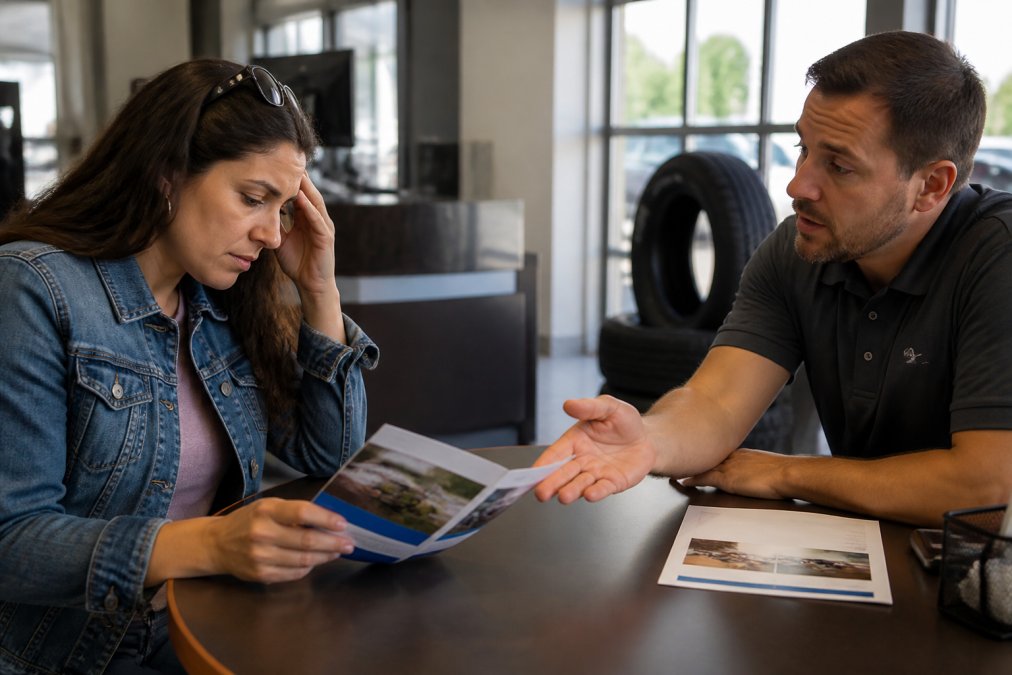
The fix is cadence. Every customer touchpoint, from the service reminder to the post-visit follow-up, should reference the program. Automated reminders do this without adding work to your service advisors.
Irrelevant Rewards and Inconsistent Redemption Processes
Rewards fail when they don't match what customers actually want. Free coffee and branded merchandise generate little excitement. Discounted maintenance, priority scheduling, and prepaid maintenance credit do, because they reduce real cost and friction.
But the deeper problem in automotive is that most programs borrow reward mechanics from retail, where purchase frequency is high and the reward can be small. A dealership customer visits the service lane two to four times a year at most. A reward that requires six paid visits to unlock is mathematically unreachable for most owners, and a reward that expires in 90 days will lapse before the next oil change interval (Check car by VIN & get the vehicle history). The reward structure has to be built around the maintenance schedule, not around visit counts.
A workable automotive reward ladder looks like this:
- First service visit after purchase: a low-friction, immediately redeemable credit, a free multi-point inspection, a tire rotation, or a set dollar amount off the first paid service. The goal is to trigger the first return, not to reward the tenth.
- Scheduled maintenance milestone: a credit that scales with the manufacturer's recommended interval, for example, a larger credit at the 30,000-mile service than at the 7,500-mile service, so the reward tracks the actual cost of the visit.
- Declined-recommendation recovery: a targeted offer on a specific declined service (brake fluid, cabin filter, alignment) that expires in a defined window. This converts a 'no' into a future 'yes' without discounting the whole menu.
- Parts-to-service conversion: a reward that credits parts purchases toward future service, which pulls do-it-yourself customers into the service lane over time.
Why Redemption Breaks at the Counter
Redemption fails for a different reason than reward design: inconsistency. One advisor applies the discount, another doesn't know the program exists. A customer who is told 'no' once rarely tries again.
The root cause is almost always that redemption lives outside the service write-up. If the advisor has to open a separate portal, look up a balance, get a manager override, and then manually adjust the repair order, the program will be applied inconsistently, not because advisors are careless, but because the workflow punishes them for using it.
Redemption should be built into the service write-up itself. When the customer record loads, the balance and any eligible rewards should appear on the same screen the advisor is already using. Applying the reward should be a single action that flows through to the repair order and back to the loyalty platform. Anything more than that will degrade under a busy Saturday.
| Failure Point | What It Looks Like | The Fix |
|---|---|---|
| Unrealistic goals | Vague targets, no owner | One measurable goal, one accountable manager |
| Weak awareness | No reminders after enrollment | Automated follow-up at every touchpoint |
| Irrelevant rewards | Branded merchandise, coffee | Service credit, priority booking, prepaid maintenance |
| Unreachable thresholds | Six-visit minimum, 90-day expiry | Rewards tied to maintenance intervals |
| Inconsistent redemption | Advisor-by-advisor variance, separate portal | Redemption built into the service write-up |
| No data | No tracking of behavior | Behavioral analytics tied to the DMS |
| No employee buy-in | Staff unaware of the program | Training plus visible incentive alignment |
| Poor integration | Manual spreadsheets | CRM and DMS integration |
Mobile Apps vs. Physical Cards in the Service Lane
A related failure is the delivery mechanism. Physical punch cards get left in the glovebox and forgotten. A digital wallet card or app that updates automatically keeps the balance in front of the customer, but only if the service team actually references it at the counter. The format matters less than whether the advisor can see and apply the reward without leaving the write-up screen. A plastic card that the advisor can scan in two seconds beats an app the customer has to open, log into, and hand across the counter.
Dealership Service Retention Strategies That Actually Work
Effective dealership service retention strategies share one trait: they run automatically. Manual follow-up collapses the moment the service department gets busy, and it always gets busy.
The workable approach combines three elements: rewards customers can actually use, prepaid maintenance that locks in future visits, and email outreach triggered by real service data. DriveIQ is a comprehensive dealership customer-retention platform designed to transform every service visit into a recurring relationship. By seamlessly integrating rewards programs, prepaid maintenance, and targeted email outreach directly into your existing dealership workflow, the platform eliminates the need for manual follow-up. DriveIQ empowers your team to act with confidence, fostering long-term customer loyalty and ensuring that the value of every service interaction is fully realized.
Integrating CRM and DMS for Automated Follow-Up
Integration is where most programs quietly break. A rewards platform that doesn't talk to your DMS means someone re-enters data by hand, and hand-entered data goes stale.
When the CRM and DMS feed a single system, follow-up becomes automatic: a declined service recommendation triggers a reminder, an upcoming maintenance interval triggers a booking prompt, and a redeemed reward updates the customer record without a phone call. This is the difference between a program that scales and one that depends on heroics.
How to Improve Dealership Service Retention With Data
Knowing how to improve dealership service retention starts with measuring the right things. Most dealerships track total service revenue, which tells you nothing about whether loyalty is working.
Track these instead:
- Service retention rate: percentage of sold customers who return for service within 12 months
- Churn rate: customers with no visit in 18 months
- Redemption rate: percentage of earned rewards actually redeemed
- Repeat visit interval: average days between service visits
Dealership-specific metrics like these expose problems that generic reports miss. A rising redemption rate with flat retention, for example, tells you customers like the rewards but aren't changing their behavior. That's a program structure problem, not a marketing problem.
Data-driven insights also enable segmentation. Customers on a prepaid maintenance plan behave differently from one-time visitors, and they should receive different communication. Behavioral analytics tied to the customer journey map make that possible.
Best Practices for Automotive Loyalty Programs
Best practices for automotive loyalty programs come down to sustainability, employee buy-in, and integration with the systems your dealership already runs on. A program that costs more to run than it returns isn't a loyalty program, it's a discount with extra steps.
Build for program scalability from day one. Reward tiers should be simple enough for a service advisor to explain in one sentence. Redemption should take seconds, not a manager override. And every team member who touches a customer needs to know the program exists and how it benefits them.
Integration With CRM and DMS Is the Real Make-or-Break
Most loyalty platforms are built for retail and bolted onto a dealership afterward. That is where programs quietly break. A rewards platform that doesn't talk to your Dealer Management System means someone re-enters data by hand, and hand-entered data goes stale within weeks.
When the CRM and DMS feed a single system, follow-up becomes automatic: a declined service recommendation triggers a reminder, an upcoming maintenance interval triggers a booking prompt, and a redeemed reward updates the customer record without a phone call. This is the difference between a program that scales and one that depends on heroics.
Before you sign with any provider, ask these questions:
- Which DMS platforms do you integrate with natively, and which require a middleware layer?
- Does the integration write back to the customer record, or is it read-only?
- What happens to loyalty data if we change DMS vendors?
- Can the platform trigger follow-up from a declined service line item, or only from a completed visit?
- How are customer consent and opt-out preferences synced between the loyalty platform and the CRM?
Compliance and Regulatory Risk in Auto Loyalty
Automotive loyalty sits at the intersection of several regulatory regimes that generic retail programs never touch. Rewards tied to vehicle sales or leases can implicate advertising and incentive rules, and any program that markets credit or financing terms alongside rewards needs to be reviewed against Truth in Lending Act disclosure requirements (12 CFR Part 1026 - Truth in Lending (Regulation Z)). On the service side, rewards that function as discounts on repair orders interact with state-level repair facility and estimate disclosure rules, and loyalty data collection is subject to state privacy statutes and the federal Safeguards Rule under the Gramm-Leach-Bliley Act, which governs how dealerships protect customer financial information (the FTC).
A few practical guardrails:
- Keep reward terms and expiration policies in writing and provide them at enrollment.
- Don't bundle a loyalty reward with a financing offer without a compliance review of the combined disclosure.
- Treat loyalty account data as covered customer information under your existing information security program, not as a marketing side project.
- Check state-specific rules before running loyalty promotions that touch vehicle pricing or lease terms.
Most of these are manageable, but they need to be handled at design time, not after a customer complaint or a regulator inquiry.
Mobile vs. Physical Cards: Consistency Beats Format
Mobile apps versus physical cards matters less than consistency. A digital wallet card that updates automatically beats a plastic card customers leave in the glovebox, but only if your team actually references it at the counter. The service lane is the moment of truth: if the advisor can see the balance and apply the reward inside the write-up, the format is working. If they can't, no app will save the program.
Measure Retention, Not Just Revenue
Finally, define success in terms of service retention, not total service revenue. Track the percentage of sold customers who return for service within 12 months, the share with no visit in 18 months, redemption rate on earned rewards, and average days between service visits. A rising redemption rate with flat retention tells you customers like the rewards but aren't changing their behavior, a program structure problem, not a marketing problem.
Frequently Asked Questions
What are the most common reasons dealership loyalty programs fail to retain customers?
Most programs fail because they copy retail models that do not fit automotive buying cycles. Unrealistic goals, poor communication, irrelevant rewards, and manual redemption processes all drive customers away. Dealerships also neglect data-driven insights and fail to integrate with their DMS, so follow-up never happens. The result is low program awareness and high churn. Fixing these requires a program built around service visits, not generic points.
How can dealerships measure the ROI of a loyalty program?
Track service retention rates, customer lifetime value, and redemption frequency against a control group. Compare repeat visit rates for enrolled versus non-enrolled customers over six to twelve months. Use your DMS to pull service lane data and calculate incremental revenue per redeemed reward. Without these metrics, you cannot know if the program is sustainable. Start with one metric, like service retention, and expand from there.
Why do customers stop participating in dealership rewards programs?
Customers stop when rewards feel irrelevant or redemption is difficult. If a free oil change requires three visits and a mail-in form, most will not bother. Poor communication also kills participation. If the program is never mentioned at the service counter or in follow-up emails, customers forget it exists. Inconsistency across departments, like sales not honoring service points, creates friction that drives people away.
How does manual follow-up impact the success of a service loyalty program?
Manual follow-up is the silent killer of dealership service retention strategies. Service advisors get busy, reminders slip, and customers never return. Automated reminders tied to your DMS fix this by triggering emails or texts after each visit. Without automation, your program relies on memory and spare time, which most service departments do not have. That inconsistency leads to low redemption and high churn.
Most dealership loyalty programs fail for structural reasons, not customer disinterest. Fix the program structure, automate the follow-up, and measure retention instead of revenue. DriveIQ handles the rewards, prepaid maintenance, and targeted email in one workflow, with data-driven insights that give your team confidence at the counter. See DriveIQ in action and turn every service visit into a recurring relationship.