 how-to
How to Increase Vehicle Service Visit Frequency
Table of Contents
- Why Increasing Service Visit Frequency Matters for Dealership Profitability
- Understanding Manufacturer-Recommended Service Intervals and Modern Vehicle Technology
- Dealership Service Retention Strategies That Drive Repeat Business
- Prepaid Maintenance Program Benefits and Implementation
- Service Department Email Marketing Templates for Consistent Outreach
- Automotive Service Scheduling Best Practices and Automation
- Customizing Service Schedules for Specific Driving Profiles and Conditions
- Preventative vs. Reactive Maintenance: The Cost-Benefit Analysis
- Frequently Asked Questions
Last Updated: September 27, 2026
Why Increasing Service Visit Frequency Matters for Dealership Profitability
Most dealerships treat service visits as one-off transactions, missing the opportunity to increase service visit frequency and build recurring revenue. A customer visiting once per year generates far less lifetime value than one visiting quarterly. Dealerships that implement structured retention strategies see customers return more often, spend more per visit, and remain loyal longer. The difference between a struggling service department and a thriving one comes down to consistency: customers don't naturally remember maintenance schedules or return unless something breaks. When you increase service visit frequency, you're ensuring customers visit as often as their vehicle actually needs service, meeting them where they are and making it easy to comply with manufacturer-recommended maintenance.
Understanding Manufacturer-Recommended Service Intervals and Modern Vehicle Technology
Manufacturer service schedules protect engine longevity, maintain warranty compliance, and ensure safety systems function properly. Modern vehicles with synthetic oils often extend intervals to 7,500-10,000 miles, while some luxury brands recommend service only once per year. Manufacturer recommendations vary widely by vehicle model, year, and engine type, a 2026 sedan has completely different needs than a 2020 pickup truck. Dealerships gain an edge by knowing the exact vehicle specifications for every customer in their database.
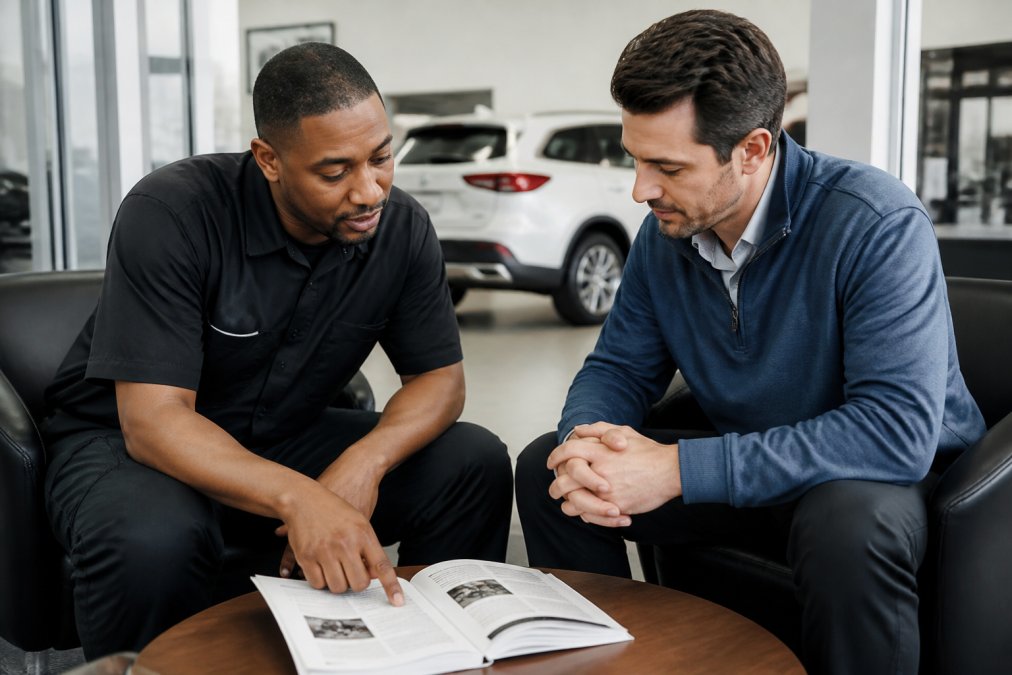
Customers who follow manufacturer schedules avoid costly repairs, maintain warranty coverage, and benefit from modern diagnostic systems that flag overdue services. Most customers don't know their specific maintenance schedule and rely on generic advice or warning lights. By educating customers about their vehicle's exact needs and automating scheduling, you increase visit frequency naturally.
Dealership Service Retention Strategies That Drive Repeat Business
Effective retention combines education, convenience, and incentive. Automated appointment reminders, transparent pricing, service history tracking, loyalty recognition, and educational content all drive repeat visits. Customers who understand the value of preventative maintenance and trust your team return consistently, regardless of minor price differences. The key is making it impossible for them to forget their service needs.
Prepaid Maintenance Program Benefits and Implementation
Prepaid maintenance programs remove friction by letting customers prepay for a set number of services. Benefits include predictable revenue, higher visit frequency, increased lifetime value, reduced no-shows, and upsell opportunities. Implementation requires clear communication about what's included, program duration, and redemption. The most successful programs tie directly to manufacturer maintenance schedules, for example, "Complete 2-Year Maintenance Plan for 2024 Honda CR-V" that includes every manufacturer-recommended service.
Service Department Email Marketing Templates for Consistent Outreach
Email is your most reliable channel for increasing vehicle service visit frequency. Customers who receive regular, valuable outreach schedule service more frequently than those who don't. Effective templates include:
Service Reminder Template: Subject: Your [Vehicle Year/Make/Model] is due for service
Hi [Customer Name],
Your [Vehicle Year/Make/Model] is approaching [specific service milestone]. Based on our records, your last service was on [date], and we recommend service every [interval].
[Service details: what will be done, why it matters]
Schedule your appointment here: [link]
Questions? Reply to this email or call [number].
Loyalty Appreciation Template: Subject: Thank you for [X] years of service
Hi [Customer Name],
We appreciate your loyalty. You've trusted us with [number] service visits since [year].
As a thank you, we're offering [specific benefit] on your next service.
Schedule now: [link]
Educational Template: Subject: What you need to know about [service type]
Hi [Customer Name],
Many vehicle owners wonder about [service topic]. Here's what you need to know:
[Brief explanation of why this service matters]
Your [vehicle] needs this service every [interval]. Let's get it scheduled.
Book appointment: [link]
One email every 4-6 weeks works better than sporadic blasts. Segment your list so customers receive relevant messages about their specific vehicles.
Automotive Service Scheduling Best Practices and Automation
Automation transforms scheduling by letting customers book online 24/7 while staff focuses on service quality. Best practices include online booking portals, SMS reminders, automated confirmations, DMS integration, and post-service follow-up. When a service advisor completes work, the system automatically schedules the next recommended service and sends the customer an appointment offer with a one-click booking link.
Customizing Service Schedules for Specific Driving Profiles and Conditions
Manufacturer recommendations account for severe driving conditions, but dealerships rarely ask customers about their driving habits. Personalizing service schedules increases visit frequency naturally by matching recommendations to real-world driving patterns, not generic intervals.
Identifying Customer Driving Profiles
Start by asking three questions during the initial service visit or first customer conversation:
- How many miles do you drive per week, and what type of driving? (Highway, city, mixed)
- Do you tow, haul, or carry heavy loads regularly? (Trailers, boats, construction equipment)
- What's your climate and road conditions? (Dusty, salty, mountainous, extreme heat/cold)
Document these answers in your customer profile. Use them to flag which customers fall into the "severe driving" category.
Severe Driving Conditions and Service Interval Adjustments
Stop-and-go traffic or frequent idling: City driving, delivery routes, or shuttle services require oil and filter changes every 3,000-5,000 miles instead of 7,500-10,000 miles, and transmission fluid service every 30,000 miles instead of 60,000 miles.
Creating Personalized Service Plans
Once you've identified a customer's driving profile, build a customized service plan that reflects their actual needs.
- Every 3,000 miles: Oil and filter change, visual brake inspection
- Every 10,000 miles: Tire rotation, suspension inspection, undercarriage wash
- Every 15,000 miles: Transmission fluid service, differential service, air filter replacement
- Every 20,000 miles: Brake fluid service, coolant system flush
- Every 30,000 miles: Spark plug inspection, battery load test
DIY Checks vs. Professional Service: What Customers Can Safely Monitor
Not every service visit requires a technician. Customers can perform simple checks between professional services, which increases their awareness of vehicle condition and builds confidence in your dealership's recommendations.
Monthly or before long trips (customer can DIY):
- Tire pressure and visual condition (check against door jamb placard for correct PSI)
- Windshield wiper fluid level
- Exterior lights (headlights, brake lights, turn signals)
- Windshield wiper condition
- Coolant level (when engine is cold)
- Brake fluid level (visual inspection only)
Every 3 months (customer can DIY):
- Battery terminals for corrosion
- Hoses for cracks or leaks
- Belts for fraying or wear
- Undercarriage for obvious fluid leaks
What requires professional service (do NOT recommend DIY):
- Oil and filter changes (disposal and environmental compliance)
- Transmission, differential, or coolant fluid services (requires proper flushing equipment and disposal)
- Brake system work (safety-critical; requires specialized tools and diagnostics)
- Suspension or steering work (safety-critical)
- Electrical diagnostics (requires scan tools and training)
- Battery replacement (requires proper disposal and terminal management)
- Tire balancing or alignment (requires specialized equipment)
Communicating Customized Schedules
When you've identified a customer's driving profile, send them a personalized service schedule document:
Subject: Your Customized Maintenance Plan for [Vehicle Year/Make/Model]
Dear [Customer Name],
[Customized service table with intervals and what's included]
Preventative vs. Reactive Maintenance: The Cost-Benefit Analysis
Preventative maintenance costs money upfront but saves money long-term. Most customers default to reactive maintenance because they don't see the cost-benefit, they skip a $200 transmission fluid service until the transmission fails and costs $3,000 to repair. Your job is making the math clear: preventative maintenance is an investment that prevents catastrophic repairs.
Real-World Cost Comparison by Vehicle Type
Sedan (2020-2024 model, 100,000-mile ownership cycle):
Preventative approach: Oil changes, transmission fluid, coolant flush, brake fluid, filters, and spark plugs = $2,875 total. Vehicle condition: Excellent; resale value: 55-65% of original.
Pickup Truck (2018-2022 model, towing-heavy use, 120,000-mile ownership cycle):
The ROI of Preventative Maintenance
For the sedan example, preventative maintenance costs $2,875 but prevents $4,500-$7,200 in repairs. That's a return of $1,625-$4,325 in avoided costs, plus a vehicle worth $5,000-$10,000 more at resale.
Why Customers Resist Preventative Maintenance
The barrier isn't logic, it's psychology. A $200 service feels expensive when the vehicle runs fine. A $3,500 transmission repair feels like an emergency when it happens.
- "Your vehicle is worth $18,000 today. A transmission failure costs $3,500 and drops resale value another $2,000. For $150 today, we prevent that."
- "You've invested $25,000 in this truck. Spending $6,500 over five years keeps it reliable and worth $15,000 at trade-in. Skipping maintenance costs you $8,000 in repairs and resale loss."
- "This is your second vehicle. If it breaks down, you're paying for a rental car while we repair it. Preventative maintenance costs less than one week of rental fees."
Frequently Asked Questions
What is the average vehicle service visit frequency for modern dealerships?
Most dealerships see customers return for scheduled service every 6 to 12 months, depending on manufacturer recommendations and driving habits. Modern vehicles with synthetic oil and advanced engine technology often stretch intervals to 10,000 miles or longer between oil changes. However, preventative maintenance tasks like tire rotation, brake inspections, and fluid level checks should occur more frequently. Dealerships that implement structured reminder systems and prepaid maintenance programs typically see service visit frequency increase by 20-40% compared to those relying on customer memory alone.
How does prepaid maintenance impact service visit frequency?
Prepaid maintenance programs create a direct financial incentive for customers to return. When customers purchase prepaid service packages upfront, they're more likely to use those services and return for additional work. Studies show prepaid maintenance increases service visit frequency by creating accountability and reducing the perception of cost at each visit. These programs also simplify budgeting for customers and ensure dealerships capture predictable recurring revenue. By bundling common services like oil changes, tire rotations, and inspections into one package, you remove friction from the scheduling decision.
What are the best strategies to improve dealership service retention?
Effective dealership service retention combines multiple tactics: automated email reminders based on mileage and time intervals, loyalty rewards programs that incentivize repeat visits, transparent communication about upcoming maintenance needs, and personalized service recommendations based on driving habits. Dealerships that track customer data and proactively reach out with tailored offers see significantly higher retention. Additionally, training your service team to educate customers about preventative maintenance and explain the long-term value of consistent service builds trust and encourages compliance with recommended schedules.
How can automated outreach increase service visit frequency?
Automated email and SMS reminders eliminate the guesswork from service scheduling. When customers receive timely notifications based on their vehicle's mileage or the time since their last service, they're more likely to book appointments without delay. Automation also ensures consistency, every customer receives the same quality messaging at the right time, removing dependency on manual follow-up. The key is personalizing these messages with the customer's vehicle information and next recommended service to increase relevance and response rates.