 listicle
Best Ways to Automate Dealership Followups
Table of Contents
- Why Automating Dealership Followups Matters
- 1. Implement Multi-Channel Communication Cadences
- 2. Use AI-Driven Lead Qualification and Routing
- 3. Build Dealership Service Follow-Up Templates
- 4. Integrate Automotive CRM Automation Tools
- 5. Balance Automation with Human Touchpoints
- 6. Measuring Service Department ROI
- 7. Ensure Compliance While Automating
- Frequently Asked Questions
Last Updated: September 26, 2026
Why Automating Dealership Followups Matters
The difference between a dealership that converts repeat customers and one that watches them drift to competitors often comes down to one thing: followup speed and consistency. When a customer completes a service visit, the clock starts ticking. Research shows that dealerships responding to customer needs within hours, not days, see dramatically higher engagement rates and service retention. This is where you need to automate dealership followups to stay competitive.
Manual followups are a bottleneck. Your service team is stretched thin managing appointments, handling walk-ins, and processing paperwork. Asking them to manually call, text, or email every customer after their visit isn't realistic. The result? Customers slip through the cracks, and repeat service revenue evaporates.
Automation changes this equation. By setting up structured followup workflows, you ensure every customer gets consistent touchpoints, reminders about their next service, loyalty rewards redemption, maintenance alerts, without your team spending hours on repetitive tasks. This guide from DriveIQ covers the best ways to automate dealership followups and shows how to do it without sacrificing the personal touch that keeps customers coming back.
Below, we'll walk through seven proven strategies that dealership managers are using right now to boost service retention and increase customer lifetime value.
1. Implement Multi-Channel Communication Cadences
A single email after a service visit isn't enough. Customers check different channels at different times. Some respond to text messages immediately. Others prefer email. A few still value a phone call. The best dealerships reach customers across all three.
Email, SMS, and Voice Touchpoints
Start with email for detailed information: service summaries, maintenance recommendations, loyalty program updates. Email gives you space to explain what was done and what's coming next. Follow up with SMS 24 hours later, a quick reminder that's hard to ignore on a phone. Then add a voice touchpoint (either automated or human) for customers who haven't engaged.
The sequence matters. Spacing these touchpoints too close together feels aggressive. Too far apart and the customer forgets about you. A common approach is email on day one, SMS on day two, and a call or voice message on day five if no response.
Timing and Frequency Best Practices
Send that first email within 2 hours of service completion, while the experience is fresh. Customers are more likely to act on recommendations when they're still thinking about their vehicle. A second touchpoint at 24 hours catches people who missed the first message. A third at 5-7 days works for seasonal reminders or upsells (tire rotation, fluid checks, cabin air filter replacement).
Avoid over-communicating. More than three touchpoints in a week feels like spam and damages the relationship you're trying to build. Most dealerships find that one email, one text, and one optional call per month keeps customers engaged without annoying them.
Track which channels work best for your customer base. Some dealerships find their older demographic prefers calls. Younger customers respond better to text and email. Use this data to personalize your cadence by customer segment.
2. Use AI-Driven Lead Qualification and Routing
Not every customer needs the same followup. A customer who just bought a new vehicle needs different messaging than one who came in for routine maintenance. AI-driven qualification sorts customers automatically based on their service history, purchase patterns, and engagement level.
By analyzing customer data, AI systems can identify which customers are most likely to book another service, which ones might be interested in warranty products, and which ones need a win-back campaign because they haven't visited in months.
Routing is equally important. Once customers are qualified, they should go to the right person. A high-value customer who spent $2,000 on service should get assigned to your best service advisor. A routine oil-change customer might go to an automated followup sequence. This prevents bottlenecks and ensures your team focuses on the customers who matter most.
Many dealerships using AI qualification report faster response times and higher conversion rates. The automation handles the triage so your team can focus on selling.
3. Build Dealership Service Follow-Up Templates
Templates save time and ensure consistency. A well-written template hits the right tone, includes the key information, and calls the customer to action. The worst templates sound robotic. The best ones feel personal even though they're automated.
Service Reminder Templates
A service reminder should acknowledge what was done, explain what comes next, and make booking easy. Here's a solid template structure:
"Hi [Customer Name],
Thanks for bringing [Vehicle Year/Make/Model] in for service today. We completed [Service Type] and your vehicle is running great.
Based on your mileage, we recommend [Next Service] around [Timeframe]. Ready to book? Reply 'YES' or call us at [Number]."
This is short, specific, and actionable. It doesn't oversell. It doesn't apologize. It just confirms the work and moves forward.
Post-Service Engagement Templates
After the reminder, a second template can highlight loyalty rewards or seasonal offers:
"[Customer Name], your loyalty account now has [Points/Rewards] available. Use them toward your next service, or redeem for [Offer]. Book now at [Link]."
The key is making the next step obvious. Don't bury the call to action. Put it first or last, somewhere the customer can't miss it.
4. Integrate Automotive CRM Automation Tools
Your CRM is the engine. It stores customer data, tracks interactions, and triggers followups. The right CRM integration means data flows automatically from your dealership management system (DMS) into your followup platform without manual entry.
DMS Integration and Workflow Automation
Most dealerships run on a DMS, software that handles inventory, sales, service scheduling, and customer records. When a service appointment is completed, that data should automatically flow to your followup system. The customer's contact information, vehicle details, and service history should all be there, ready to trigger the right message.
This eliminates manual data entry and reduces errors. It also means your followup starts instantly, no delay waiting for someone to manually log the customer into a separate system.
If you're already using one of these systems, your integration path is simpler. If you're using a different DMS, verify that your chosen followup platform supports it before committing.
Lead Scoring and Trigger-Based Actions
Lead scoring ranks customers by likelihood to act. A customer who just spent $1,500 on service scores higher than one who came in for an oil change. Trigger-based actions then automate what happens next.
5. Balance Automation with Human Touchpoints
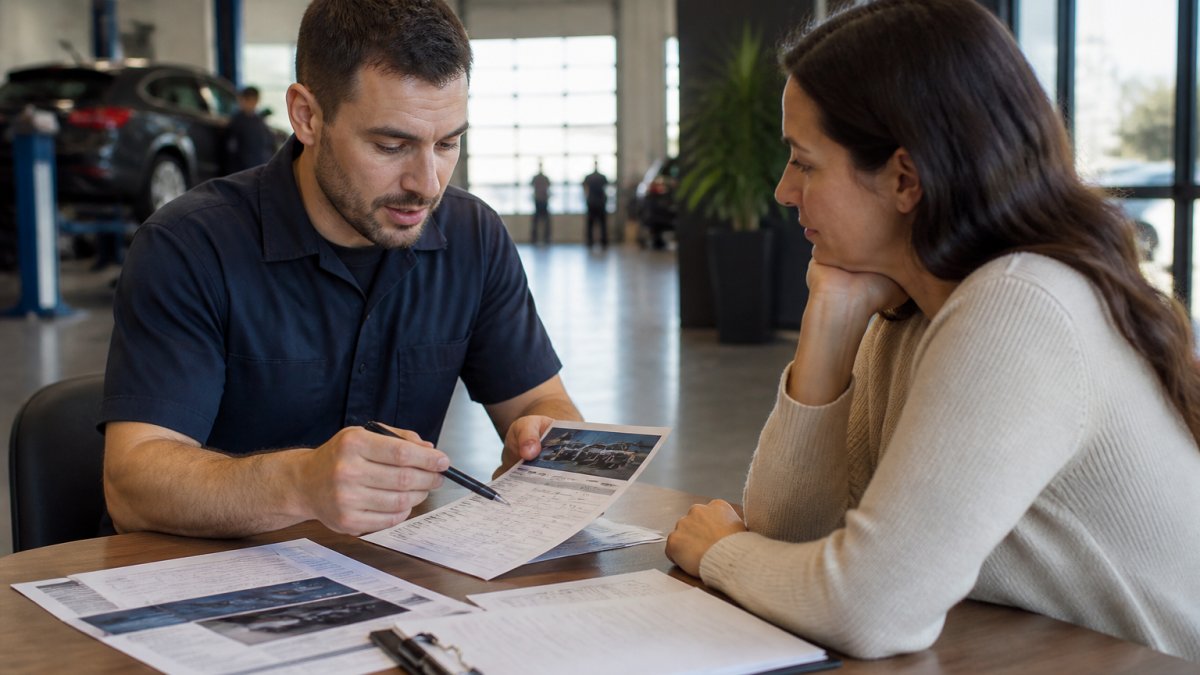
Here's what most guides get wrong: they treat automation as a replacement for human interaction. It's not. It's a multiplier.
6. Measuring Service Department ROI
You're investing time and money into followup automation. You need to know if it's working.
Key Metrics to Track
Start with these four metrics:
Repeat service rate: What percentage of customers who completed a service visit book another appointment within 90 days? Track this before and after implementing automation.
Calculating Return on Investment
ROI for service automation is straightforward. Calculate the value of each additional service visit, then multiply by the number of extra visits you're generating.
7. Ensure Compliance While Automating
Automated followups come with legal responsibility. You need to comply with TCPA (Telephone Consumer Protection Act) regulations and CAN-SPAM rules for email.
Frequently Asked Questions
How can I automate follow-up emails effectively for service customers?
Set up trigger-based email sequences that activate after service completion. Include appointment reminders 7-10 days before scheduled maintenance, post-service satisfaction checks within 24 hours, and maintenance alerts based on service history. Personalize messages with customer name and vehicle details. Avoid excessive frequency, most dealerships see best results with 2-3 touchpoints per month. Test subject lines and send times to maximize open rates, and always include an easy unsubscribe option to maintain compliance.
What CRM features are essential for dealership automation?
Look for CRM tools that offer DMS integration, automated workflow triggers, multi-channel messaging (email, SMS, voice), lead scoring, and detailed reporting. Essential features include the ability to create custom follow-up sequences based on customer behavior, track interaction history across all channels, and segment customers by service history or purchase intent. The platform should also provide real-time visibility into pipeline status and allow your team to override automated messages when personal outreach is needed.
How does automated follow-up impact service lane customer lifetime value?
Automated follow-up systems increase repeat service visits by keeping maintenance top-of-mind and reducing the time between customer touchpoints. By automating reminders and personalized offers, dealerships reduce no-shows and extend customer relationships. The key is balancing automation with genuine value, customers respond better to relevant maintenance reminders and loyalty rewards than generic promotional messages. Tracking customer lifetime value before and after implementation shows the financial impact clearly.
What's the difference between general CRM automation and dealership-specific solutions?
Dealership-specific automation tools integrate directly with DMS platforms, understand automotive service cycles, and include pre-built templates for common dealership workflows. General CRM platforms require more manual setup and don't account for manufacturer maintenance schedules or dealership-specific metrics like service lane profitability. Dealership solutions also provide compliance guardrails for TCPA regulations and include features like inventory integration, service advisor assignment, and dealership-specific reporting that general platforms lack.
How do I measure whether automated followups are actually working?
Track response time from lead to first contact, appointment booking rate, no-show reduction, and repeat service frequency. Calculate service department ROI by comparing revenue before and after automation implementation. Monitor customer satisfaction scores and unsubscribe rates to ensure automation isn't hurting relationships. Set a baseline for these metrics before launch, then review monthly.