 ultimate-guide
Automotive Loyalty Program Implementation Guide
Table of Contents
- Understanding Automotive Loyalty Programs
- Dealership Rewards Program Examples and Structures
- Loyalty Program Enrollment Strategies for Dealerships
- Selecting Dealership Loyalty Program Software
- Automotive Loyalty Program Best Practices
- Measuring Program Success and ROI
- Common Implementation Mistakes to Avoid
- Frequently Asked Questions
Last Updated: October 5, 2026
Understanding Automotive Loyalty Programs
An automotive loyalty program is a structured rewards system that incentivizes customers to return for service, parts, and future vehicle sales with benefits tied to their transaction history and vehicle ownership.
Service revenue is unpredictable: a customer visits once, then disappears for months, often returning only when a warning light appears. A well-designed loyalty program turns this reactive cycle into predictable revenue.
The difference is structural. Retail programs reward frequency; automotive programs reward necessity, maintenance customers already need, with your dealership as the obvious choice.
Why dealerships need loyalty programs
Service departments run on thin margins, and one-time customers create constant acquisition costs.
Treating loyalty programs as optional upgrades is a mistake, they're infrastructure. Without structured engagement, customers drift to competitors the moment a coupon lands in their inbox.
Most dealerships launch a program, wait, and abandon it when adoption is slow.
How automotive loyalty differs from retail
Retail loyalty rewards frequency and basket size.
Retail programs can operate independently of point-of-sale systems. Automotive programs fail without deep integration into your dealership management system (DMS), service scheduling, and customer communication platforms.
The stakes differ too. Retail loyalty targets discretionary spending; automotive loyalty targets essential maintenance, competing with independent shops and quick-lubes on price.
Dealership Rewards Program Examples and Structures
Structure determines adoption and redemption rates. A poorly designed program creates confusion; a well-designed one is self-evident to customers and staff.
Points-based rewards for service visits
Points-based systems award a fixed number of points per visit or per dollar spent, redeemable for service discounts, free maintenance, or accessories, familiar from other industries.
The advantage is simplicity; the disadvantage is that points feel abstract until redemption is close, a customer with 30 of 100 points may not feel motivated to return.
Cashback and monetary incentives
Cashback programs offer immediate monetary rewards tied to visits or purchase amounts, $10 back on a $150 service, or 5% on parts.
Cashback requires careful margin planning: too much erodes profitability, too little feels cheap. Tiered cashback, standard 3%, loyalty members 5%, VIP 7%, rewards long-term loyalty and deeper engagement.
Punch-card and visit-based programs
Punch-card programs reward a fixed number of visits, after ten service visits, a free oil change or $50 service credit. They're simple, need minimal technology, and show clear visual progress.
Visit-based programs are the digital equivalent: rewards after a set number of visits within a timeframe, such as a service credit after three visits in six months, creating urgency and consistent engagement.
Membership and subscription tiers
The advantage is predictable revenue and higher commitment, paying members use the program more. The disadvantage: membership can feel exclusionary, and adoption lags if the value isn't clear.
Loyalty Program Enrollment Strategies for Dealerships
Enrollment is where most programs fail. A well-designed program with zero enrollment is useless. Your enrollment strategy determines whether your program becomes standard practice or a forgotten initiative.
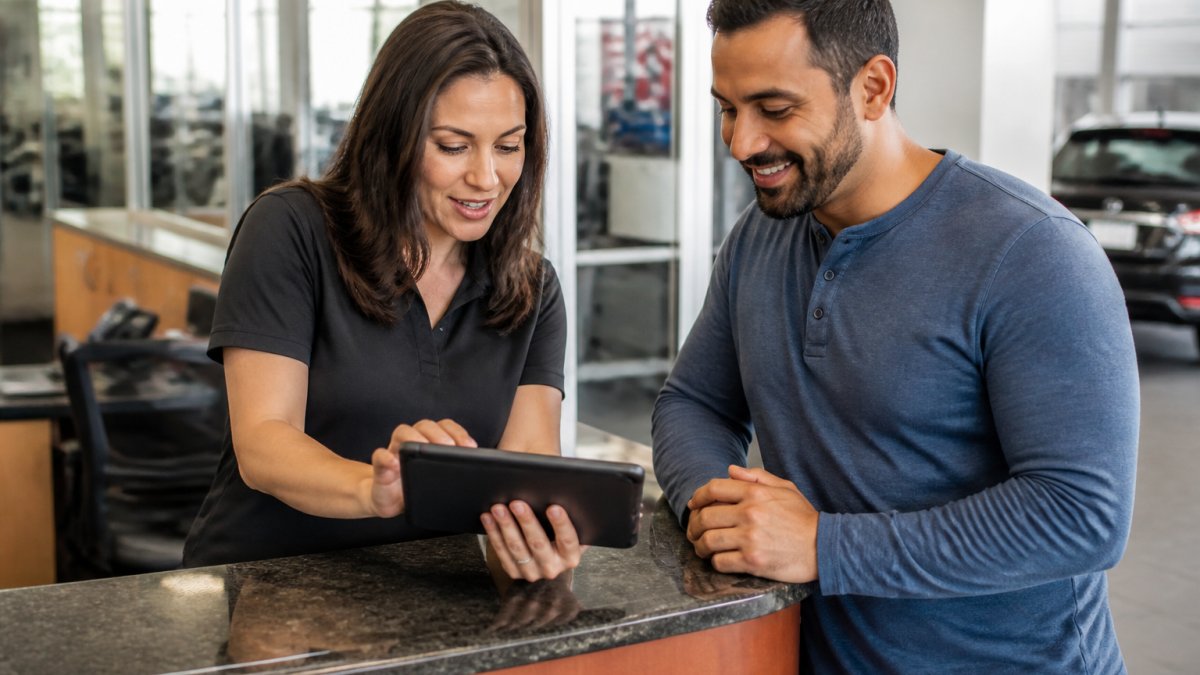
In-service enrollment at the point of sale
The easiest time to enroll a customer is during their service visit, when they're already at your dealership.
A simple approach: at check-in, the advisor says, "We have a loyalty program that earns you rewards on every service.
Training is key: advisors must understand the benefits and explain them confidently, or they'll skip enrollment on busy mornings.
Digital enrollment and email capture
Digital enrollment expands beyond the service department.
Website enrollment should be prominent on your homepage or service page.
Email campaigns to existing customers should highlight benefits and make enrollment simple. A single-click link or QR code reduces friction.
The advantage of digital enrollment is reach, you can enroll customers who haven't visited in months.
Incentivizing first-time signup
Offering a signup incentive accelerates enrollment.
Signup incentives should be valuable but not so generous they erode margins. A $25 credit on a $150 service is meaningful without being excessive.
Placement matters. Promote incentives in-service, on your website, and in email campaigns: "Join today and get $25 off your next service." This becomes a reason to enroll immediately rather than later.
Selecting Dealership Loyalty Program Software
Your technology choice determines whether your program scales or stalls. The wrong platform creates manual work, poor data integration, and staff frustration. The right platform automates engagement and provides visibility into program performance.
Integration with DMS and point-of-sale systems
Your loyalty platform must integrate seamlessly with your existing DMS and point-of-sale system.
A well-integrated system automatically captures service details, vehicle, service type, cost, date, and updates customer loyalty records without manual intervention.
Integration also enables reporting: which customers are most engaged, which services drive the highest loyalty participation, and which rewards are most redeemed.
Automation and email workflow capabilities
Your program should automate customer communication.
Automation reduces manual work and ensures consistent communication. Without it, communication becomes sporadic, busy teams forget follow-ups, and engagement drops.
Automated email workflows increase repeat visit rates significantly compared to manual outreach. The consistency and timing matter more than the message itself.
Customer data and privacy compliance
Your loyalty platform must comply with data privacy regulations.
Ask vendors about compliance: Are they SOC 2 certified? Do they encrypt customer data in transit and at rest?
Privacy compliance also includes consent management. Customers must opt into email communications and data collection, and your platform should track consent preferences and honor opt-out requests immediately.
Scalability for dealerships of all sizes
Your program must scale with your dealership. A platform that works for a 50-service-per-week shop should also work for a 500-service-per-week shop.
Ask vendors: Does your platform handle high transaction volumes without slowdowns? How does pricing scale as we grow?
A platform designed for enterprise dealership groups may be overkill for a smaller shop; one designed for small shops may lack features larger operations need.
Automotive Loyalty Program Best Practices
A well-designed program structure is only half the battle. Execution determines whether your program becomes a revenue driver or a forgotten initiative.
Personalizing rewards based on vehicle and service history
Generic rewards don't work.
Your loyalty platform should track vehicle information, make, model, year, and mileage, enabling personalized offers. A customer approaching 60,000 miles receives a transmission service promotion; a luxury vehicle owner receives premium maintenance package offers.
Service history personalization is even more powerful.
Timing promotions around maintenance intervals
Your program should align promotional offers with these intervals. A customer at 4,800 miles receives an oil-change promotion; at 28,000 miles, an air-filter promotion.
This requires automation. Manual tracking across hundreds of customers is impossible; your platform must calculate intervals from service history and mileage, then trigger offers automatically.
Training staff on enrollment and engagement
Your program is only as good as your team's execution.
Conduct initial training at launch. Explain benefits, enrollment process, and how rewards are earned and redeemed.
Ongoing training is equally important. As features are added or promotions change, keep your team informed.
Track advisor performance. Which advisors enroll the most customers? Which locations have the highest participation?
Measuring Program Success and ROI
A loyalty program without measurement is a cost center, not a profit driver. Track specific metrics to understand program impact and justify continued investment.
Key performance indicators for automotive loyalty
Track these core metrics:
- Enrollment rate: Percentage of service customers enrolled
- Repeat visit rate: Percentage of members returning for a second service within six months
- Average service frequency: Number of services per member annually
- Reward redemption rate: Percentage of earned rewards redeemed
- Customer lifetime value: Total revenue generated by a member over their lifetime
- Program participation rate: Percentage of enrolled members actively using the program
These metrics reveal program health. High enrollment with low repeat visits suggests enrollment is easy but the program isn't driving behavior change. Low redemption rates suggest rewards aren't appealing or customers don't understand how to redeem them.
Tracking repeat visit rates and customer lifetime value
Repeat visit rate is the most important metric, it measures whether your program actually brings customers back.
Customer lifetime value measures total revenue from a customer over their relationship with your dealership.
Track these metrics monthly and look for trends. If repeat visit rates or lifetime value are flat or declining, your program needs adjustment.
Calculating incremental revenue and profit impact
Incremental revenue is additional revenue generated by the program that wouldn't have occurred without it, the true measure of ROI.
Calculate it this way: compare service revenue from members versus non-members, adjusted for member tenure.
Subtract program costs, software, marketing, staff training, reward fulfillment, to get net profit impact.
Common Implementation Mistakes to Avoid
Learning from others' failures accelerates your success.
Expecting immediate results. Loyalty programs take time to mature.
Ignoring inactive members. Members who enroll but never return are wasted opportunity.
Not measuring results. A program without metrics is a black box.
At DriveIQ, we've built our platform specifically for dealership operations. We integrate directly into your DMS and point-of-sale system, combining rewards programs, prepaid maintenance, and automated email outreach into a single workflow.
The question isn't whether to implement a loyalty program.
Frequently Asked Questions
How do you implement a loyalty program at an automotive dealership?
Start by defining your reward structure (points, cashback, or tiered membership), then select software that integrates with your DMS and point-of-sale system. Enroll customers at service check-in, train your team on the program benefits, and set up automated email follow-ups to encourage repeat visits. Track enrollment rates, repeat visit frequency, and incremental revenue to measure success. Most dealerships see measurable results within 60-90 days of launch.
What enrollment strategies work best for dealership loyalty programs?
The most effective approach combines in-service enrollment at the point of sale with digital capture. Offer a welcome incentive (bonus points or discount) to encourage immediate signup. Train service advisors to present enrollment as a customer benefit, not an obligation. Follow up with non-enrolled customers via email with a simple online enrollment link. Dealerships using multi-channel enrollment typically achieve 40-60% participation rates.
What should you look for in dealership loyalty program software?
Your software must integrate seamlessly with your existing DMS and email system without requiring manual data entry. Look for automation features that trigger service reminders and targeted promotions based on vehicle maintenance history. Ensure the platform handles customer data securely and complies with privacy regulations. Verify it scales for your dealership size and offers clear reporting on redemption rates, customer lifetime value, and repeat visit metrics.
How can automotive loyalty programs increase repeat service visits?
Loyalty programs work by rewarding customers for service visits and creating psychological incentives to return. Personalize offers based on vehicle type and service history, for example, sending oil-change reminders with bonus points to customers due for service. Use tiered rewards to encourage higher-value service purchases. Consistent communication through email keeps your dealership top-of-mind. Programs that tie rewards to maintenance intervals typically see 15-25% increases in repeat service appointment bookings.
What metrics should you track to measure automotive loyalty program success?
Monitor enrollment rate, repeat visit rate, and average customer lifetime value. Track redemption rate to ensure customers are actually using rewards. Calculate incremental revenue by comparing service revenue from program members versus non-members. Measure email engagement rates and appointment booking conversion. Set benchmarks in your first 90 days, then review quarterly. Strong programs typically show 20-30% higher repeat visit rates among enrolled customers.
Should a dealership use points, cashback, or service-based rewards?
Points-based systems work well for dealerships because they feel like a game and encourage higher engagement. Cashback is simpler to understand but may reduce perceived value. Service-based rewards (free oil changes, discounts on specific services) drive higher-margin repeat business. Many successful dealerships use a hybrid: points that can be redeemed for either cashback or service discounts. Test your customer base to see which resonates most.
How do you handle staff training for a new automotive loyalty program?
Create a simple one-page guide for service advisors explaining the program benefits and enrollment process. Conduct a 15-minute team meeting before launch to walk through the customer conversation. Emphasize that enrollment benefits the customer, not just the dealership. Role-play the enrollment pitch so advisors feel confident. Provide ongoing reinforcement through weekly metrics that show how many customers enrolled and how many repeat visits resulted. Recognition and incentives for high enrollment rates boost adoption.